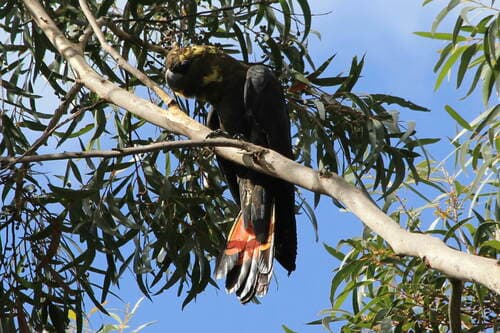
Glossy Black-Cockatoo Feeding Season
high
April–July
SA
Kangaroo Island is home to the last viable population of the Kangaroo Island subspecies of the glossy black-cockatoo - one of Australia's rarest birds, with only around 420-450 individuals remaining. These quiet, unassuming cockatoos feed almost exclusively on the seeds of drooping she-oaks, methodically cracking cones in the tree canopy while their brilliant scarlet tail panels glow in the filtered light. Unlike their raucous white cousins, they are easy to miss unless you know what to listen for - a soft, creaking call and the sound of falling she-oak litter. Autumn and winter, when she-oaks are in seed, offer the best viewing opportunities. Sought by birders from around the world.
The eastern Dudley Peninsula (Penneshaw to American River area) and central island around Parndana are the most reliable areas post-2020 fires. Lathami Conservation Park (unsealed access, high-clearance recommended) is managed for the species. Walk quietly along tracks near she-oak stands at dawn or dusk. Kangaroo Island Landscape Board runs guided census walks in spring — check their website for public participation opportunities.
What affects timing
Dependent on she-oak seed availability. In years of good seed production, birds are conspicuous and relatively easy to observe in mature she-oak woodland. The KI subspecies (Calyptorhynchus lathami halmaturinus) is endangered with a population of around 420-450 birds.
Stay on tracks and avoid flushing birds from feeding trees. The population is critically small — any disturbance to breeding pairs or nesting trees has population-level significance.
Kangaroo Island
Interactive map coming soon